
The Evolution of Infrastructure Intelligence in India
From roads, railways and power networks to connected systems, digital platforms and strategic decision-making, India’s infrastructure story is entering a new phase — one where intelligence is becoming as important as physical capacity.
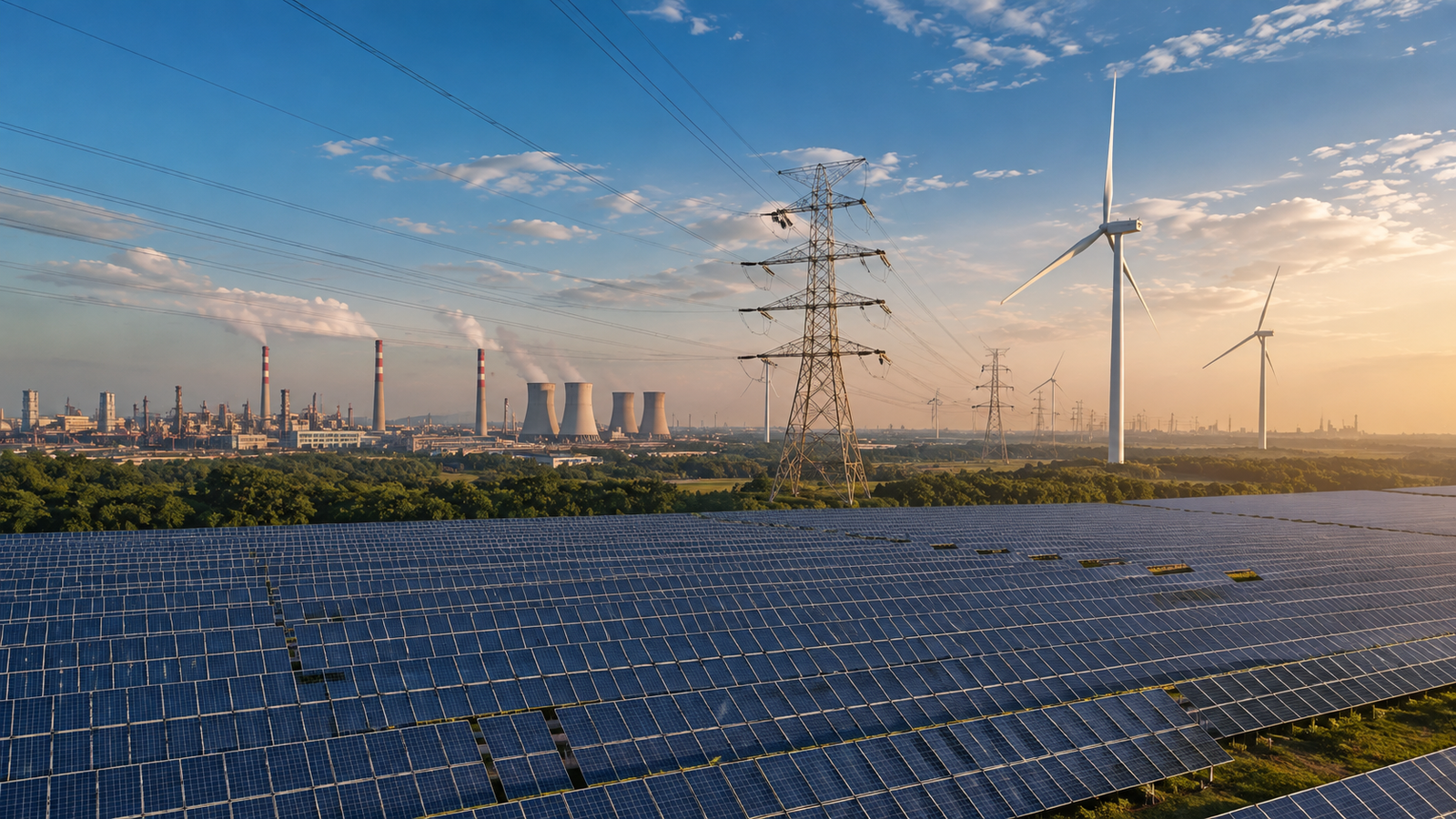
Infrastructure is often described through what can be seen: highways, bridges, airports, railway lines, ports, power plants, pipelines, industrial corridors, telecommunications networks and expanding cities. But beneath this physical layer lies another infrastructure that is becoming increasingly important — the infrastructure of information, connectivity, analysis and decision-making.
India is now at a point where the traditional understanding of infrastructure is no longer sufficient to explain the scale and complexity of the country’s transformation. The country is building physical assets at enormous scale while simultaneously creating digital systems, technology platforms, financial networks, logistics ecosystems and institutional capabilities that determine how efficiently those assets can operate.
This is where the idea of infrastructure intelligence becomes important. It is not simply another name for technology. It is a broader way of understanding how infrastructure is planned, financed, constructed, connected, monitored, managed and ultimately experienced by citizens, businesses and institutions.
The evolution is therefore not only about building more. It is about understanding more — understanding demand, movement, investment, energy consumption, urban growth, industrial activity, environmental pressure, customer behaviour, operational performance and the strategic forces that shape India’s next phase of development.
India’s infrastructure story is gradually moving from capacity creation toward intelligent capacity management — from asking how much infrastructure exists to asking how effectively, sustainably and strategically it performs.
From Building Infrastructure to Understanding Infrastructure
For much of India’s modern development journey, infrastructure policy was dominated by a fundamental question: how do we create the physical foundations required for economic growth?
The answer required roads, railways, ports, airports, electricity generation, transmission networks, irrigation systems, telecommunications infrastructure, industrial facilities and urban services. Each generation of infrastructure represented an attempt to remove a particular constraint on economic and social development.
Roads reduced travel time. Railways connected markets. Ports connected India to international trade. Electricity enabled industrial production. Telecommunications connected people and businesses. Urban infrastructure supported the movement of growing populations into cities.
But scale changes the nature of a problem.
When infrastructure systems become larger and more interconnected, simply constructing additional assets does not automatically guarantee better outcomes. A road interacts with logistics. A logistics network interacts with industrial production. Industrial production interacts with energy demand. Energy demand interacts with transmission capacity, fuel availability, pricing and environmental considerations.
Infrastructure therefore becomes a system rather than a collection of individual projects.
Understanding that system requires information. It requires data from multiple sources to be brought together, interpreted and converted into decisions.
The infrastructure system is larger than the asset
A highway is not merely a stretch of asphalt. Its value depends on traffic patterns, connectivity to economic centres, logistics demand, safety, maintenance, land use, public transport integration and the economic activity generated around it.
Similarly, an energy network cannot be understood simply through installed capacity. Its performance depends on demand patterns, transmission infrastructure, fuel supply, distribution efficiency, technology, storage, pricing and the changing composition of generation.
This systems perspective marks one of the most important steps in the evolution of infrastructure intelligence.
02 — The Indian TransformationIndia’s Infrastructure Landscape Is Becoming More Connected
India’s development story is increasingly defined by connectivity. Physical connectivity, digital connectivity, financial connectivity and industrial connectivity are beginning to reinforce one another.
The modern Indian infrastructure environment includes national highways, expressways, railway modernisation, metro systems, airports, ports, freight corridors, industrial clusters, energy networks, renewable generation, urban infrastructure, telecommunications and rapidly expanding digital public systems.
These systems do not operate independently.
A logistics corridor can influence industrial investment. Industrial investment can create new energy demand. New urban development can change mobility patterns. Mobility patterns can influence transport infrastructure requirements. Digital connectivity can change how citizens access services and how businesses operate across these physical networks.
The result is an increasingly interconnected national infrastructure ecosystem.
The next generation of infrastructure advantage will not be determined only by how much India builds. It will increasingly depend on how intelligently India connects, operates and understands what it has built.
When Data Becomes Part of Infrastructure
One of the defining changes of the last decade has been the rapid expansion of the digital layer surrounding physical infrastructure.
Sensors, satellite imagery, geographic information systems, connected devices, enterprise platforms, mobile applications, digital payments, cloud computing, artificial intelligence and real-time analytics are changing the way infrastructure systems can be observed and managed.
This does not mean that every infrastructure project needs to become a technology project. It means that information is becoming an increasingly important component of infrastructure performance.
Consider a modern urban transport system. Physical roads and rail lines remain essential, but their performance can be influenced by traffic data, passenger information, digital ticketing, predictive maintenance, route optimisation and real-time operational intelligence.
The same principle applies to energy networks, water systems, industrial facilities, logistics operations and public services.
From historical reporting to real-time intelligence
Traditional infrastructure management often relied heavily on periodic reports. Information was collected, compiled and reviewed after an event or at predetermined intervals.
Digital infrastructure allows organisations to move closer to continuous visibility.
Instead of asking only what happened last month, decision-makers can increasingly ask what is happening now, why it is happening, what could happen next and what intervention may produce a better outcome.
That progression — from reporting to monitoring, from monitoring to analysis, and from analysis toward prediction — is central to the development of infrastructure intelligence.
04 — Beyond TechnologyInfrastructure Intelligence Is Not Just About AI
It would be easy to reduce infrastructure intelligence to artificial intelligence, dashboards or digital platforms. That would miss the larger idea.
Technology is an enabler. Intelligence is the ability to turn information into understanding and understanding into better decisions.
A sophisticated dashboard is of limited value if the organisation does not know which questions it needs to answer. A large dataset is of limited value if it is not interpreted correctly. An AI system is of limited value if its recommendations cannot be translated into practical action.
Infrastructure intelligence therefore sits at the intersection of several disciplines:
- Infrastructure planning and project development.
- Energy and resource management.
- Industrial and economic analysis.
- Urban and regional development.
- Data, technology and digital transformation.
- Business strategy and investment intelligence.
- Public policy and institutional decision-making.
- Communication and stakeholder understanding.
The strength of the concept lies precisely in this intersection. Infrastructure does not exist inside a single discipline, and its future cannot be understood through a single lens.
05 — The Energy ConnectionEnergy Is Becoming a Strategic Intelligence Challenge
Few infrastructure systems demonstrate the importance of intelligence more clearly than energy.
India’s energy transition involves multiple simultaneous transformations: increasing demand, renewable energy expansion, transmission requirements, changing consumption patterns, electrification, gas infrastructure, storage technologies, energy efficiency and the continuing need for reliable supply.
Each part of the system affects another.
The expansion of renewable generation creates new requirements for grid planning and balancing. Industrial growth changes the geography of demand. Urbanisation changes consumption patterns. Electrification changes the relationship between transport and power systems.
The result is a more complex energy environment in which strategic information becomes increasingly valuable.
Understanding where demand is emerging, where infrastructure is constrained, where investment is accelerating and where new technologies can create economic value is no longer simply an operational exercise. It is a strategic intelligence function.
06 — Industry and InvestmentInfrastructure Intelligence Is Also Business Intelligence
Infrastructure development creates economic opportunities far beyond the construction of physical assets.
Every major infrastructure investment creates secondary and tertiary effects. New transport connectivity can influence land values, logistics costs and industrial location. New energy capacity can influence manufacturing decisions. New urban infrastructure can influence commercial development and consumer behaviour.
For businesses and investors, understanding these relationships can be as important as understanding the individual project itself.
Infrastructure intelligence can therefore help answer questions such as: Where is growth happening? Which sectors are expanding? Which regions are attracting investment? What infrastructure constraints may limit growth? Which technologies could alter established business models? Where could new opportunities emerge?
This makes infrastructure intelligence relevant not only to governments and infrastructure companies, but also to investors, financial institutions, technology companies, manufacturers, consultants, developers and businesses whose future depends on India’s physical and economic networks.
07 — The Human DimensionUltimately, Infrastructure Exists for People
Amid the discussion of technology, investment and systems, it is important not to lose sight of the purpose of infrastructure.
Infrastructure exists to improve the conditions under which people live, work, travel, communicate and build businesses.
A highway matters because it changes mobility. A railway matters because it connects people and markets. An airport matters because it expands access. Reliable energy matters because it supports homes, hospitals, schools and industries. Digital infrastructure matters because it changes access to information and services.
The real test of intelligent infrastructure is therefore not how sophisticated the technology looks. It is whether the system produces better outcomes.
Better outcomes can mean shorter travel times, greater reliability, lower costs, improved safety, cleaner energy, stronger economic opportunity, better public services or more resilient communities.
Intelligence should ultimately make infrastructure more useful, more responsive and more aligned with the needs of society.
08 — The Next DecadeWhat the Next Phase of Infrastructure Development Could Look Like
The next phase of India’s infrastructure development is unlikely to be defined by one technology or one sector. Instead, it will be shaped by convergence.
Physical infrastructure will increasingly interact with digital systems. Energy systems will interact with mobility. Industrial systems will interact with logistics. Cities will interact with data platforms. Businesses will increasingly depend on real-time information about the infrastructure ecosystems around them.
Artificial intelligence may accelerate this transformation by allowing large volumes of information to be analysed more quickly. Predictive systems may improve maintenance. Digital twins may allow planners to model complex infrastructure environments. Geographic intelligence may improve regional planning. Automation may change how projects and operations are managed.
But the central challenge will remain human: deciding what matters, establishing priorities, interpreting evidence and converting intelligence into action.
The strongest infrastructure ecosystems will increasingly be those capable of combining physical assets, digital systems, institutional capability, skilled people and strategic intelligence into one connected decision-making environment.
India Is Entering an Information-Intensive Development Era
India’s infrastructure requirements are expanding at the same time that the country’s economy is becoming more complex and connected.
The decisions being made today can influence India’s economic geography for decades. Transport corridors can reshape cities. Industrial infrastructure can influence regional employment. Energy decisions can affect competitiveness. Digital networks can change how businesses operate.
In such an environment, information cannot remain an afterthought.
The ability to understand infrastructure trends, interpret investment movements, examine policy developments, identify emerging technologies and explain the forces behind change becomes increasingly important.
This is the space in which Infrastructure Intelligence seeks to operate: not simply documenting what is being built, but examining the systems, decisions, investments and ideas behind India’s transformation.
Editorial PerspectiveLooking Beyond the Concrete
Infrastructure is visible everywhere. Its intelligence is often invisible.
It is visible in the movement of goods across a logistics corridor, in the changing electricity demand of a growing city, in the location of a new industrial investment, in the expansion of a transport network and in the decisions taken months or years before a project becomes physically visible.
To understand infrastructure properly is therefore to look beneath the surface.
It means examining the relationships between policy, capital, technology, geography, people, markets and physical assets.
That deeper examination is becoming essential as India moves through one of the most consequential infrastructure-building periods in its modern history.
Infrastructure intelligence begins where infrastructure reporting ends: with the attempt to understand not only what is changing, but why it is changing, what it means and what may come next.
From Infrastructure to Intelligence
India’s infrastructure journey has always been a story of ambition. From expanding basic connectivity to building modern transport corridors, energy systems, industrial networks and digital infrastructure, every generation has attempted to create the foundations for the next stage of national development.
The next stage requires something more.
It requires the ability to see infrastructure not as isolated projects but as interconnected systems. It requires better information, stronger analysis, more effective communication and a deeper understanding of the economic and social forces surrounding every major infrastructure decision.
That is the emerging meaning of infrastructure intelligence.
It is about connecting the physical with the digital, the project with the system, the investment with the outcome and today’s decision with tomorrow’s consequence.
India is building rapidly. The opportunity now is to understand that transformation with equal depth.
Because the future of infrastructure will not be defined only by what India builds.
It will also be defined by how intelligently India understands, connects, manages and evolves what it builds.
The Next Chapter Is About Understanding the System.
India’s infrastructure transformation is already underway. The next challenge is to understand its scale, its direction, its opportunities and its consequences — with clarity, evidence and strategic intelligence.
Infrastructure Intelligence begins with that purpose: to look beyond the visible asset and examine the larger system shaping India’s future.
We are studying what that building means.